
Rabbit gets a bad reputation. People expect it to be gamey, dry, or difficult to work with. The truth is almost the opposite. Rabbit is one of the leanest, cleanest-tasting proteins you can cook — but it demands respect.
This recipe is about understanding the meat, not fighting it. Through proper aging, brining, fat management, and gentle cooking, we turn a notoriously dry protein into something juicy, deeply seasoned, and packed with character.
This is oven jerk rabbit, Feed & Teach style.
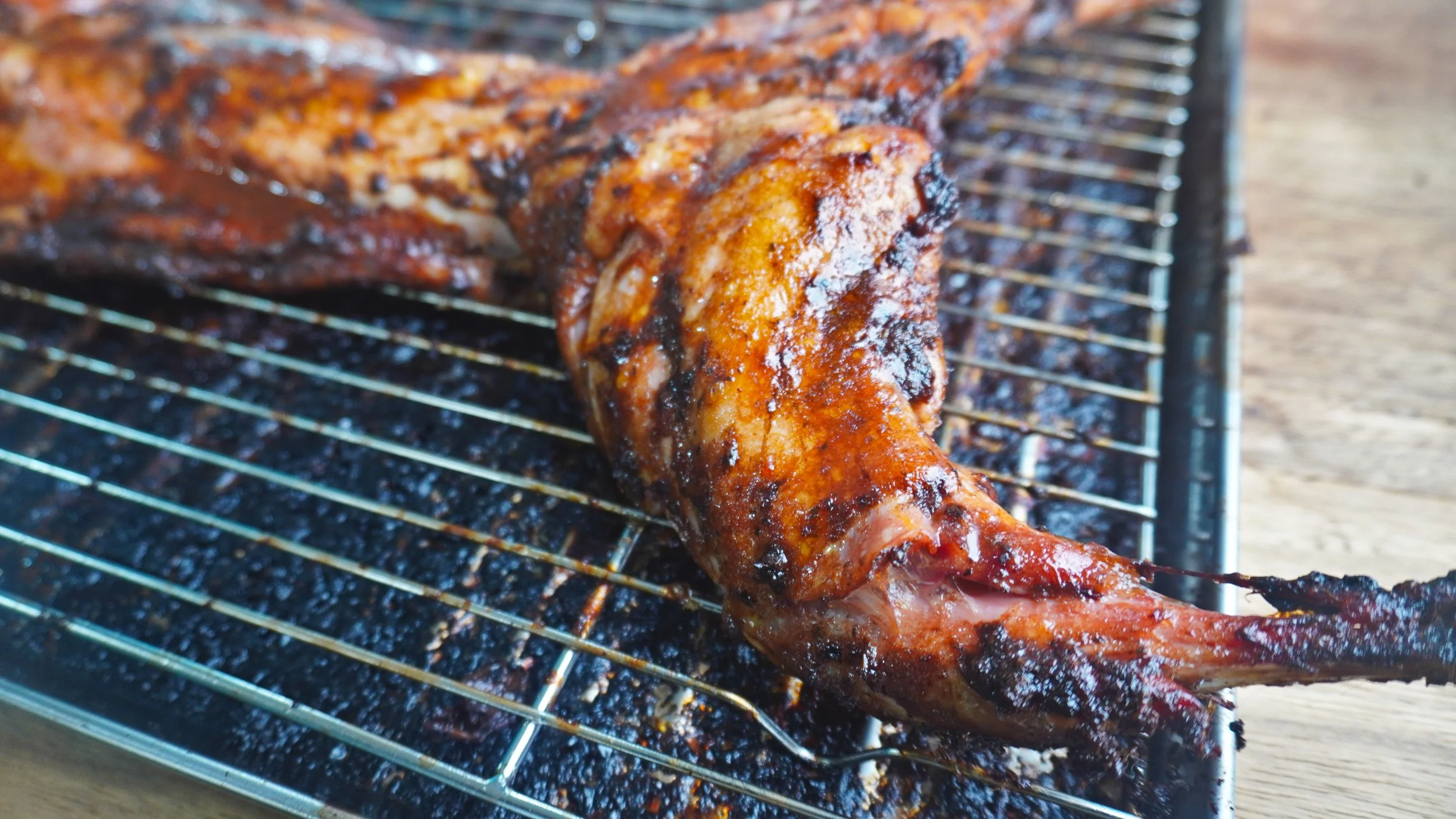
Juicy Jerk Rabbit
Understanding Rabbit Meat
Rabbit is extremely lean and very high in protein, with little to no intramuscular fat. Its muscle fibers are densely packed, which makes it highly digestible and gives it a distinct texture — tender, yet structured.
That same leanness is also why rabbit dries out so easily. To cook it well, we need to understand how meat behaves after death.
Rigor Mortis Matters
If you’re buying rabbit from a butcher, this step is already handled for you. If you’re harvesting or butchering your own rabbit, it’s critical.
Rigor mortis is the stiffening of muscle after death. It usually begins a few hours after dispatch and can last anywhere from 12 to 24 hours, depending on temperature and the size of the animal.
Cooking meat while it’s still in full rigor results in tough, chewy texture and muted flavor. As rigor passes, natural enzymes relax the muscle fibers, improving tenderness and taste.
In this case, the rabbit was rested, frozen, then thawed — allowing full enzymatic breakdown. The result is relaxed, supple meat that’s ready to cook.
Why Brining Is Non‑Negotiable
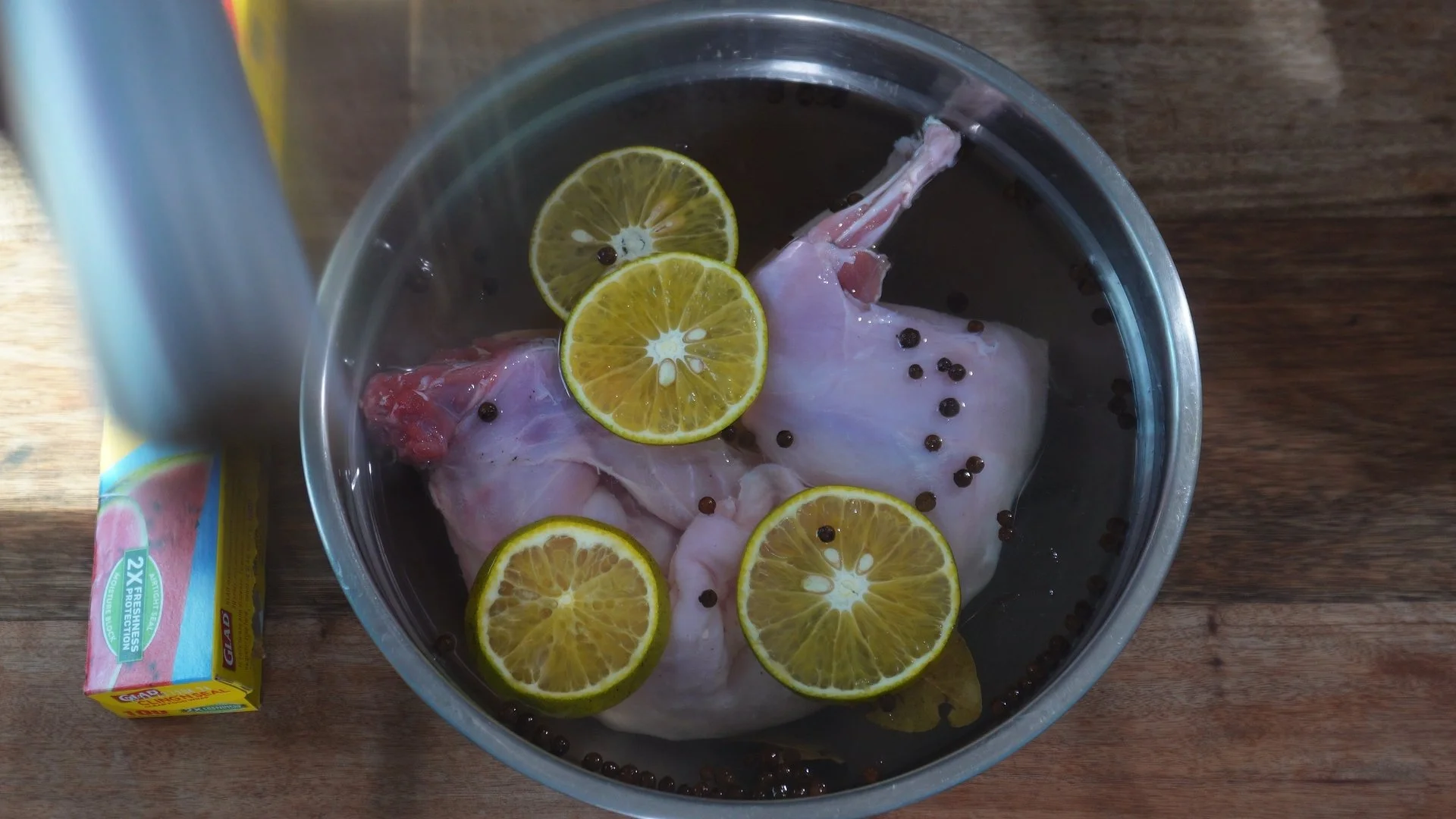
Basic Rabbit Brine
Because rabbit has almost no fat, brining is essential. A proper brine:
Improves moisture retention
Seasons the meat evenly throughout
Introduces subtle background flavor
We’re using a 2 percent salt brine, which is ideal for lean meats like rabbit.
Recipe Card: Oven Jerk Rabbit
Yield
Serves 3–6
Prep Time
30 minutes active
Brine + Marinate Time
8–14 hours total
Cook Time
~90 minutes
Ingredients
Whole Rabbit
1 whole farm‑raised rabbit, flattened
Brine (2% Salt)
80 oz water by weight (half liquid, half ice)
1.6 oz kosher salt
1½ tbsp dried pimento (allspice)
3–4 cloves garlic, smashed
2 bay leaves
2 tbsp sugar (optional)
A few slices of orange
Jerk Marinade
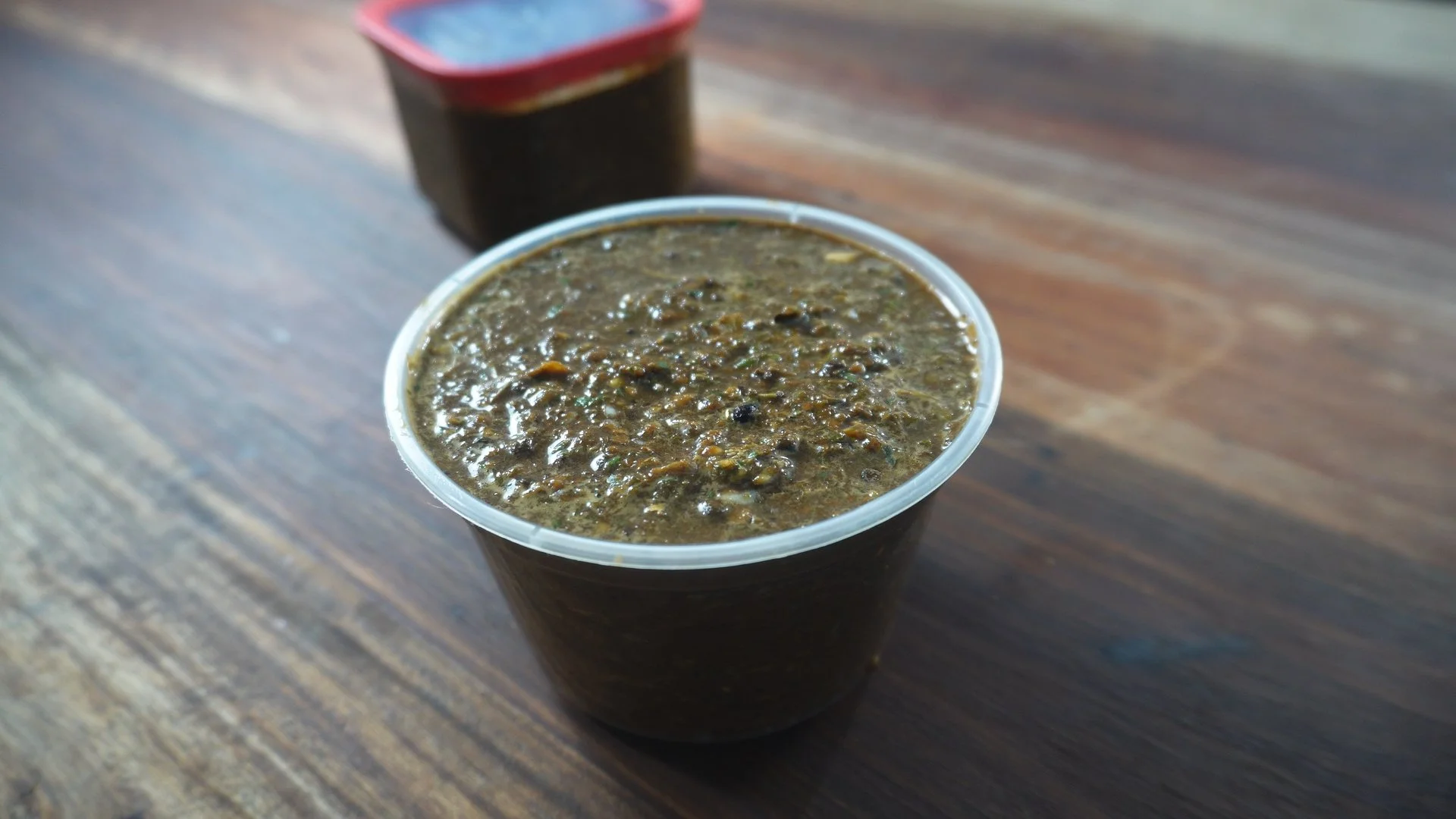
Jerk Marinade
Fresh thyme (heavy amount)
Pimento (allspice)
Cloves
Onion
Scallion
Garlic
Ginger
Browning
Brown sugar
Crushed red pepper sauce (or scotch bonnet)
Cane vinegar
Neutral oil
Soy sauce
Jerk Butter & Glaze
Reserved jerk marinade solids
1 stick butter
Red Stripe beer
Ketchup
Soy sauce
Optional extra pepper sauce
Method
1. Brine the Rabbit
Heat the liquid portion of the water with salt, pimento, garlic, bay leaves, and sugar. Simmer briefly to dissolve the salt and extract flavor. Remove from heat.
Add the ice to instantly cool the brine. Once cold, add orange slices and submerge the rabbit fully.
Brine for 4–6 hours, or up to 12 hours max.
Overbrining will begin to cure the meat rather than simply season it.
2. Dry & Marinate
Remove the rabbit from the brine and pat completely dry. Moisture is the enemy of good roasting.
Blend all jerk marinade ingredients until smooth. Do not add extra salt — the brine already handled that.
Coat the rabbit thoroughly, ensuring full coverage. Marinate for 30 minutes to 2 hours.
Remove excess marinade before cooking.
3. Low & Slow Oven Jerk
Place the rabbit on a wire rack set over a baking tray. Add remaining beer to the tray below to create humidity.
Bake at 300°F (150°C).
Meanwhile, combine reserved marinade solids with butter and a splash of beer to make jerk butter.
Brush the rabbit with jerk butter every 20 minutes, flipping once, until the butter is used.
4. Glaze & Finish
When the rabbit is about two‑thirds done, pour off the pan juices.
Add ketchup and soy sauce to create a glaze.
Increase oven temperature to 400°F (205°C) and glaze generously to build color and crust.
Cook until internal temperature reaches 165°F (74°C).
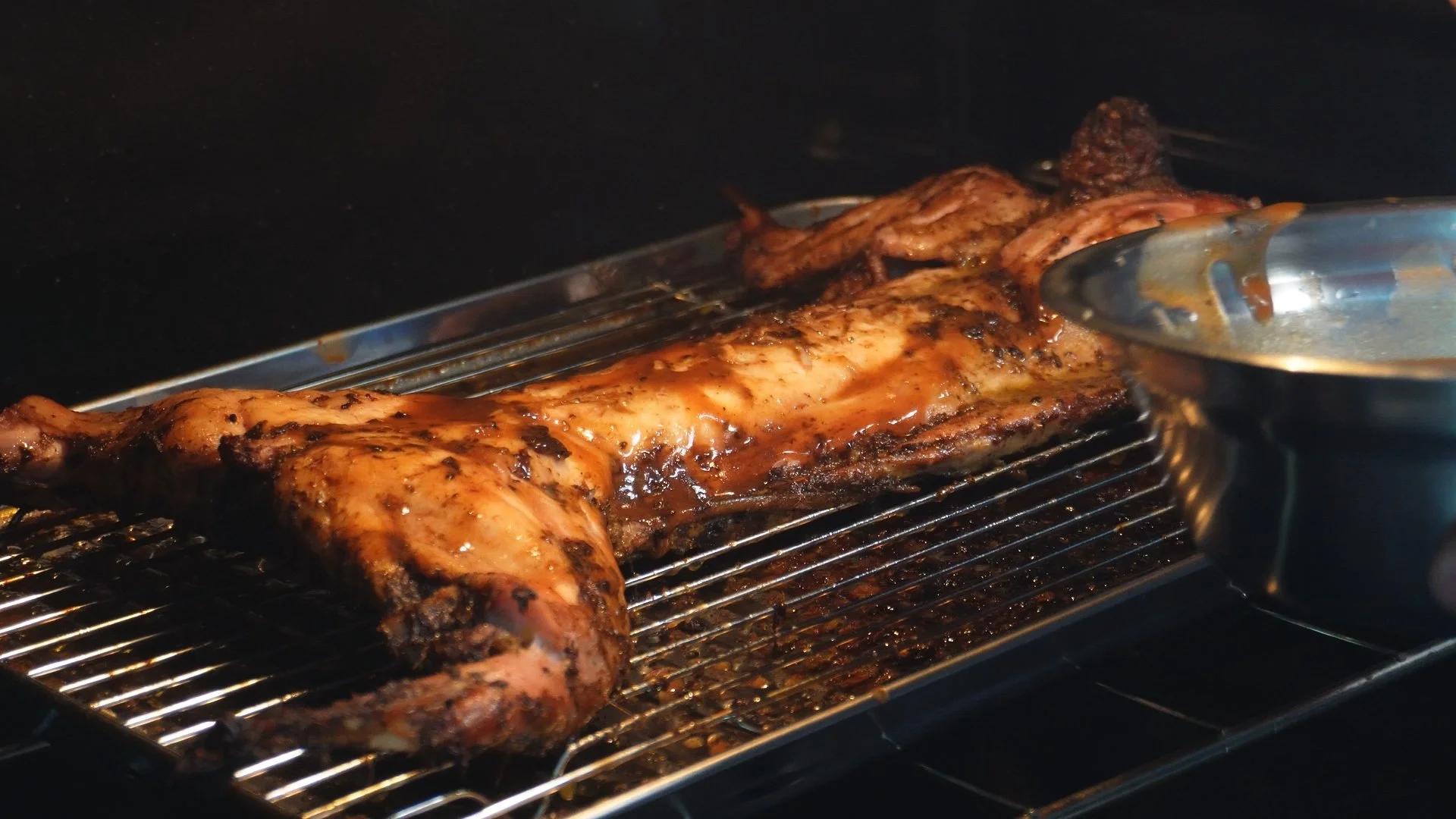
Glazing Rabbit
5. Rest & Serve
Rest the rabbit for 10 minutes before chopping.
Finish the glaze with extra pepper sauce if desired and serve alongside the meat.
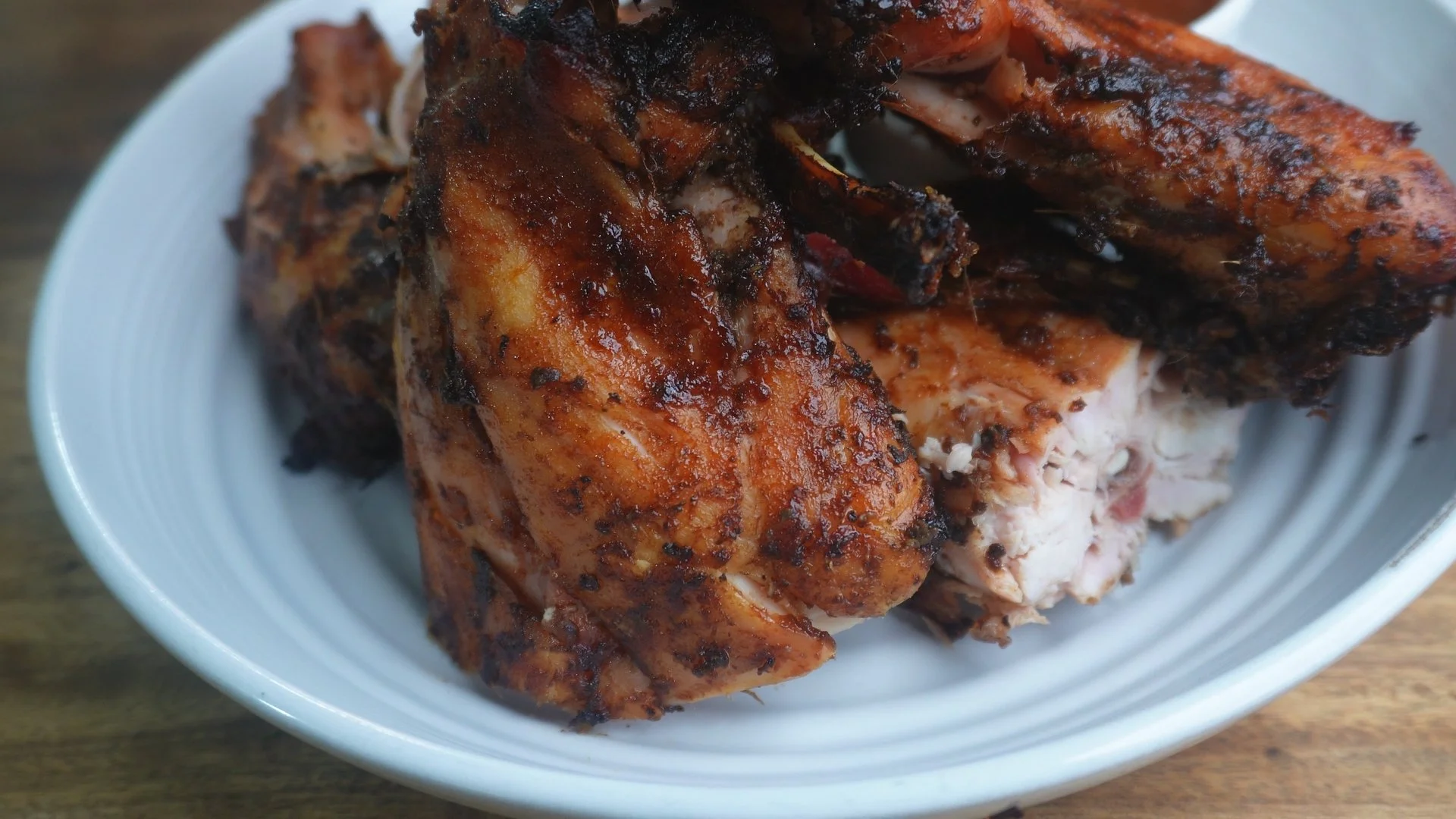
Finished Oven Jerk Rabbit
Final Notes
Rabbit cooked properly is not dry, not gamey, and not boring. It’s mild, slightly sweet, and closer to turkey than chicken in flavor.
Farm‑raised rabbit has a clean taste that pairs beautifully with jerk’s heat and aromatics. The dense muscle fibers give it structure, even when it’s tender and juicy.
This is a dish built on patience, understanding, and restraint!
